
Hail Damage Roof Inspection in San Antonio: What to Look For
If you live in San Antonio long enough, you’ll eventually hear hail hammering on the roof. Texas regularly ranks at or near the top of the country for hail-related insurance claims, and Bexar County has had some severe storms. The April 2016 hailstorm on the Northwest Side, which hit Helotes, Leon Valley, and the surrounding neighborhoods, is still one of the costliest hail events in Texas history.
The hard part about hail damage is that it’s often invisible from the ground. A roof can look fine from the driveway and still have bruised shingles, cracked mats, or broken seals that start leaking months later. Here’s what to look for after a storm, what a professional inspection covers, and how to protect your insurance claim.
When is hail season in San Antonio?
Hail can fall any time thunderstorms are strong enough, but in South Central Texas the most active stretch is usually spring, roughly March through June. Fall storms can produce hail too. If a storm drops hail at your home, even pea-sized, it’s worth taking a careful look. Hail around an inch in diameter (quarter-sized) or larger is generally when shingle damage becomes much more likely, though wind, the age of your roof, and the type of material all play a role.
Step 1: Stay safe and start on the ground
Please don’t climb onto your roof after a storm. Wet shingles, damaged decking, and steep pitches make roofs dangerous, and walking on a damaged roof can make it worse. Instead, start with what you can see safely from the ground:
- Gutters and downspouts. Look for dents and dings in metal gutters and downspouts. Check the gutter outlets and the ground beneath them for piles of shingle granules, which look like coarse dark sand.
- AC condensers and outdoor equipment. Dented fins on the air conditioning unit are one of the easiest signs that hail of meaningful size fell at your property.
- Window screens, siding, and fascia. Torn screens, chipped paint, and spatter marks on siding or fences help show the size and direction of the hail.
- Roof vents and flashing. From the yard, use binoculars to look at metal roof vents, turbines, and pipe boots. Dents on soft metal are a common sign that the shingles around them were hit too.
- Your vehicles and patio furniture. Damage to cars, grills, and outdoor items helps document how severe the storm was.
Take dated photos of everything. Write down the date and approximate time of the storm. That record helps if you file a claim.
Step 2: Check inside the house
Go into the attic if it’s safe to access and look for water stains, damp insulation, or daylight coming through the decking. Inside the house, check ceilings near exterior walls and around chimneys, skylights, and vent pipes. Hail damage doesn’t always cause immediate leaks, so no stains doesn’t mean no damage, but active leaks need fast attention. If water is coming in, call for emergency service and move valuables out of the way.
What hail damage looks like on different roofs
Asphalt shingles. These are the most common roofs in San Antonio. Hail can knock granules loose and leave dark, round spots. Hits can feel soft like a bruise, crack the fiberglass mat underneath, or break the seal strip that holds a shingle down. Granules protect shingles from UV, and in our sun, exposed spots age much faster.
Tile roofs. Clay and concrete tile is durable, but large hail can crack or chip individual tiles, especially at edges and corners. Cracked tiles let water reach the underlayment beneath.
Metal roofs. Hail can dent panels. Some dents are cosmetic, while others can affect seams, fasteners, or coatings. How cosmetic damage is treated depends on your insurance policy, so read it carefully.
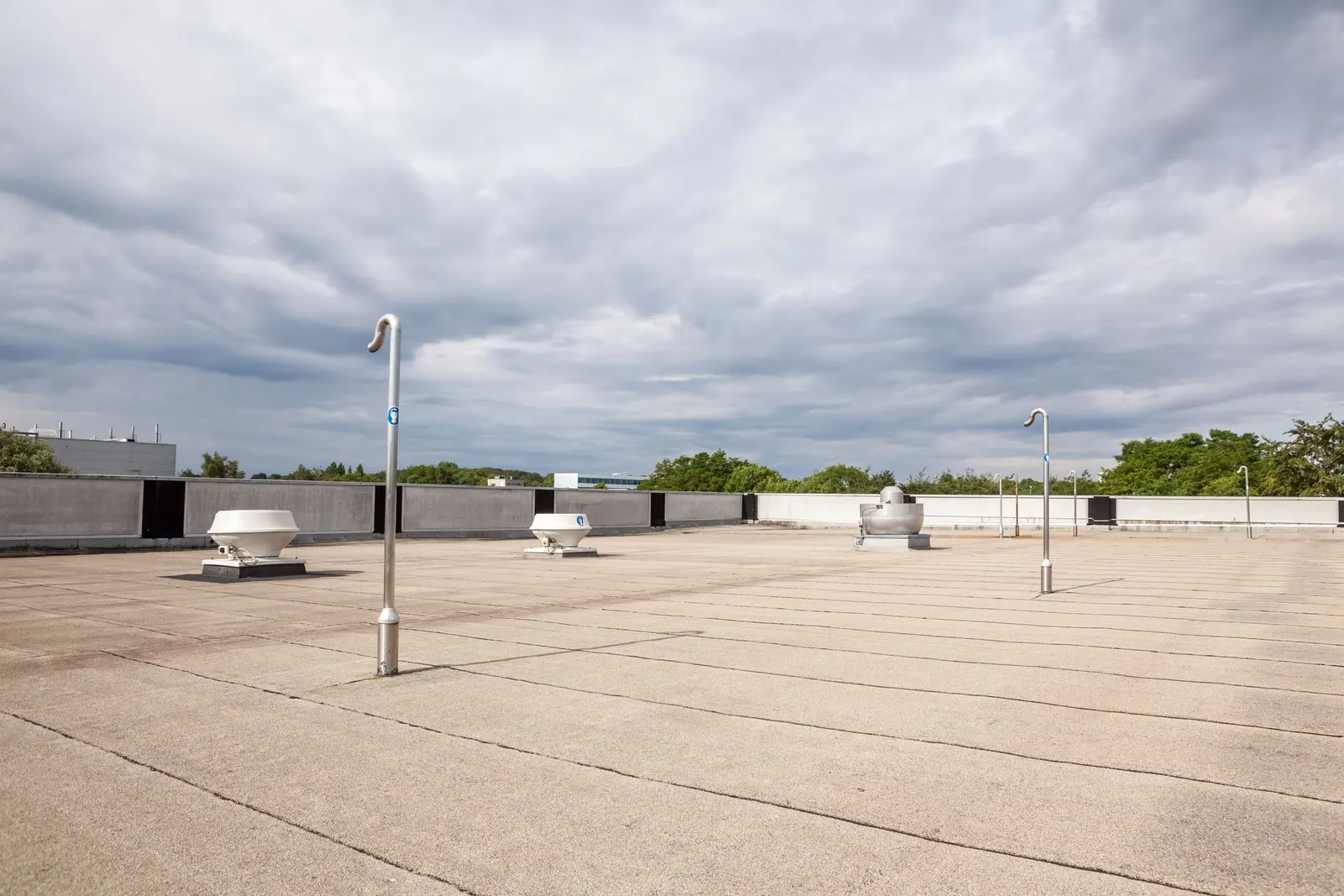
Flat and low-slope commercial roofs. Hail can puncture or fracture membranes, crack coatings, and damage rooftop units and flashing. These problems are easy to miss without walking the roof.
What a professional roof inspection covers
A good hail inspection is more than a quick look from a ladder. When Twin Hammers inspects a roof after a storm, we look at:
- Each roof slope for hail hits, granule loss, cracked or split shingles, and lifted tabs from wind
- Soft metals such as vents, flashing, drip edge, and gutters, which help confirm hail size and direction
- Ridge caps, valleys, and roof-to-wall flashing, where leaks often start
- Penetrations like pipe boots, skylights, and chimneys
- Attic signs of moisture, if accessible
- Whether damaged materials can be repaired or matched, or whether a larger repair or replacement is needed
We photograph what we find and give you a clear explanation and a written estimate. Sometimes the answer is that your roof came through fine, and that’s worth knowing too.
When to call your insurance company
If an inspection shows hail damage, the next step is usually to contact your insurance company and open a claim. Homeowners policies have deadlines and requirements for reporting damage, so don’t wait months to find out. Before you file, it helps to know your deductible. Many Texas policies have a separate wind and hail deductible, often a percentage of your dwelling coverage. We explain the whole process in our guide to how roof insurance claims work in Texas.
Twin Hammers is a preferred company with many insurance providers, and we can provide documentation and an estimate for your claim.
Watch out for storm chasers
After big hailstorms, out-of-town crews often knock on doors across San Antonio. Some are legitimate, but some disappear once the work is done, and that becomes a problem when you need warranty service. Before you sign anything, confirm the company has a local address and phone number, check their reviews, and ask about manufacturer certifications and warranties. Our article on questions to ask before hiring a roofing company has a full checklist.
Twin Hammers Roofing & Contracting has been based on Culebra Road in San Antonio since 2014. We’re a GAF Master Elite® Contractor and Owens Corning Preferred Contractor, and we’re rated 4.9 from 243 Google reviews.
Should you repair or replace after hail?
Minor, isolated damage can often be repaired. Widespread damage across several slopes, or damage on a roof that was already near the end of its life, often makes replacement the better choice. If you’re replacing, ask about impact-resistant (Class 4) shingles. They’re rated to stand up better to hail, and some insurers offer premium discounts for them. Read more in signs you need a roof replacement vs. repair.
Get your roof inspected
If hail hit your home or business anywhere in San Antonio and the surrounding area, schedule a roof inspection with Twin Hammers. Estimates are free, and we offer 24/7 emergency service if you have an active leak. Call (210) 650-2090 or request a free estimate online.
Need a roofer in San Antonio? Twin Hammers Roofing & Contracting offers free estimates and 24/7 emergency service across San Antonio, Boerne, and the surrounding area.
Related services
Areas we serve
Helotes · Alamo Ranch · Boerne · Shavano Park · Stone Oak · Timberwood Park · Schertz · Converse · All service areas